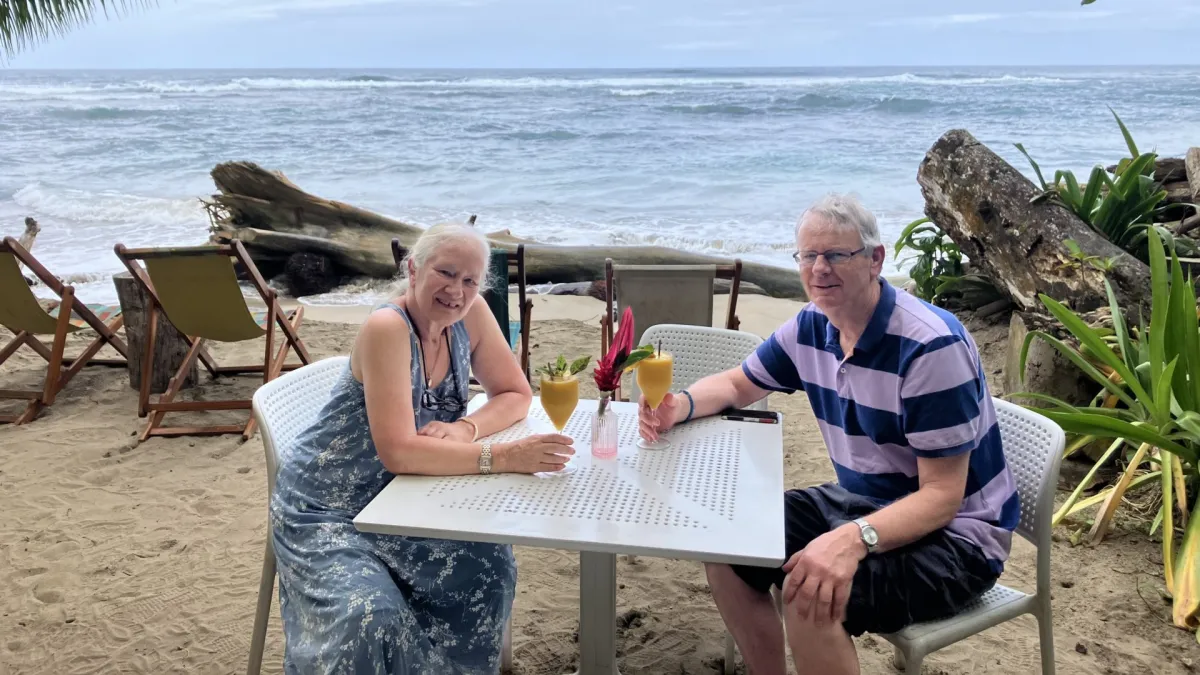
Costa Rica’s Caribbean region is known for its beautiful white-sand beaches, excellent surfing opportunities, and a relaxed, laid-back atmosphere that enhances its appeal for visitors.

The experience you describe in Cahuita National Park beautifully captures the vibrant biodiversity and serene natural beauty of Costa Rica’s Caribbean coast. The warm early March weather, dappled sunlight, and close encounters with wildlife like white-faced capuchin monkeys, raccoons, and green iguanas highlight the richness of this small country, which boasts 6 percent of the world’s biodiversity despite its tiny land area.
This deep connection to nature and the country’s abundant natural treasures contribute significantly to the sense of contentment among its people. Costa Rica’s recognition as the first Latin American country to rank among the top five “world’s happiest countries” in the World Happiness Report speaks to the positive impact of its environment on national well-being.

Cahuita National Park is among Costa Rica’s lesser known – and least visited – protected areas. It covers 2,600 acres, includes a five-mile coastal walking trail and blends dense tropical rainforest with the nation’s best-preserved coral reefs.
We are keen to get a clear view of the country’s most recognisable creature – the two-fingered (also known as the two-toed) sloth. Up to now we’ve had tantalising glimpses – a hairy backside in an almond tree and fingers wrapped around the branch of a coconut tree. But we are about to strike gold.
Our guide Justo is hurriedly training his telescope towards the upper branches of a cecropia tree and beckons us to look. Peering into the lense reveals a mother sloth pulling herself up to nibble on a succulent leaf, while her baby, wrapping its legs around her fur to cling on, snacks on the branch below.

To witness these curious looking creatures, with their big eyes, black noses and seemingly gentle smiles, is more than we could have hoped for.
For our first visit to the country, this was a great introduction to the pura vida (“pure life”, the Costa Rican catchphrase for a laidback style of living).
Many residents in Cahuita and other seaside towns are descendants of Jamaican workers who came to Costa Rica in the late 19th century to build the Jungle Train railway, which carved through 100 miles of forest from the capital, San José, to the port of Limón, in aid of the “banana boom”.
They joined the indigenous Bribris and Spanish-heritage Latinos to make up a diverse population mix on this coast, later supplemented by a growing community of North American – and some European – immigrants.

A fuller taste of the area comes with our visit to the busy town of Puerto Viejo de Talamanca, 10 miles south of Cahuita. Here, Jamaican heritage is celebrated, including with a mural of Marcus Garvey, whose political activism was shaped when he worked on a banana plantation in Limón province.
On the main drag, shops and cafés, often made of wood and framed by a veranda, are painted in vibrant colours: yellow, lime green, coral, salmon and red. We stop for excellent coffee at Café Gustitos. Later, we eat at Soda Chitos (sodas are small, family-run restaurants offering home-made cuisine), sampling a spicy chicken dish with beans.

At night in high season (December to April) Puerto Viejo’s bars hum with the sound of reggae. By day, one of the town’s main draws is surfing as its sandy, palm-tree fringed beaches have some of the biggest waves along the Caribbean coast. We walk to the southern end of the town and watch in admiration as, on a choppy morning, about 20 surfers struggle with the “La Salsa Brava”, a wave known to reach 12 metres high.
Our hotel is four kilometres out of town. To get to it, we take a bright red tuk-tuk, our driver sharing the road with the many bicycles and scooters that predominate in Puerto Viejo.
We are staying at Aguas Claras, an ecologically minded, boutique hotel comprising rooms and bungalows in a lush, wildlife-filled jungle setting. Macaws screech at dawn, howler monkeys hop among the palm trees, and agoutis (guinea-pig like creatures) amble along the winding pathways.

The hotel is the creation of San José artists Elizabeth Steinvorth and her daughter, Elena Rohrmoser. Their watercolours, bright mosaics, and other artworks enhance nearly every room.
We walk a few hundred yards from the hotel to the Jaguar Rescue Centre (there are no jaguars here at present), which aims to rehabilitate and – if possible – rewild injured or abandoned animals and birds. Although illegal, it is common in Costa Rica for people to keep wild animals as pets.
Paco the spider monkey is a case in point. Tied up at home for 27 years, he had become obese, unable to climb and suffered from severe muscle atrophy. But with the efforts of volunteers, Paco, now on a proper diet and with greater attention, can clamber round.
We find it hard not to fall in love with a country that has such beguiling wildlife. And, on this still relatively unspoilt Caribbean coast where the mañana, y mañana (“tomorrow and tomorrow”) philosophy reigns, the pulse slows, but the senses stir.
Leave a Reply